Exterior rendering
Render Colour Changes in Beeston | Coating Existing Finishes
Changing the colour can refresh a suitable existing render without replacing it. The important word is suitable: the covering needs assessment before a coating is selected. A decorative treatment changes appearance. It does not rebuild loose render, remove the shape of pebbledash or resolve a leaking detail behind a stained patch.

On this page
Decide what you want to keep
Look at the wall’s texture and profile before considering colours. If you like its shape but dislike the shade, a compatible decorative treatment may be worth investigating. If the aim is a much flatter surface, a coating alone may not deliver it. Describe that distinction clearly so the proposal addresses the actual result you want.
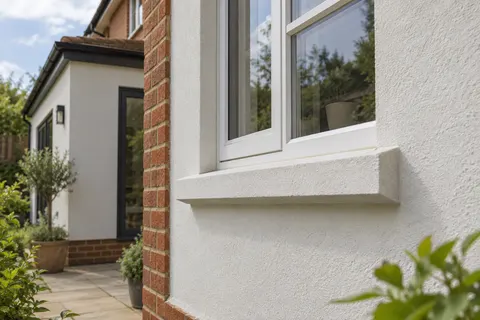
Also identify features that should retain their existing appearance: exposed brick, stone sills, frames, vents and fittings. Their protection and the boundaries of the new colour belong in the scope. A careful colour change can look untidy if it ends at inconsistent lines or spreads onto details that were supposed to remain visible.
- Clean Washed down, with algae and mould treated and left to work.
- Repair first Cracks and hollow patches are repaired before any coating.
- Prime or stabilise Where the coating maker requires it on that surface.
- Coating Usually two coats of a breathable masonry or silicone coating.
The usual order of work. The survey and the chosen products decide the actual steps.
Assess the covering and previous treatments
The existing render, paint layers and their condition influence which coating can be used. Ask what evidence supports compatibility with the proposed product. Areas of loose material, cracking or contamination need a defined response before decorative work begins. Washing the wall is not a substitute for assessing whether its layers are stable and suitable.
Where the finish has been treated several times, available maintenance records can help. Keep any previous product information, but do not assume it is accurate without checking the wall. If the original render system is known, use its relevant guidance when considering later treatment. The specification should say how uncertain areas will be investigated rather than treating all elevations as identical.
Investigate marks that may return
A dark streak below a gutter or a patch around a pipe can indicate repeated wetting. Cleaning and recolouring may improve the appearance while leaving the source untouched. Inspect the relevant rainwater details and coordinate necessary repairs first. The same applies to damage around fixtures or openings that could be disturbed again during later building work.
Surface growth should be assessed and treated using a method suitable for the existing finish. Avoid choosing a cleaning chemical or pressure simply because it worked on a different material. Follow appropriate product guidance and consider adjacent surfaces. The purpose is to prepare the wall without damaging the retained system or creating a new maintenance problem.
Test the colour beside the materials that stay
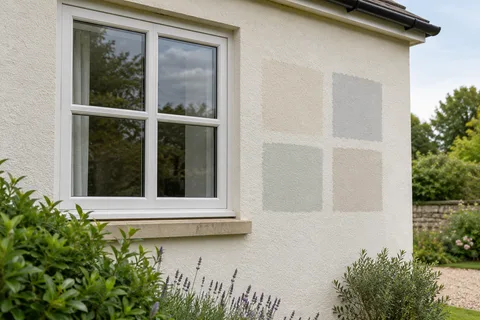
Brickwork usually contains several tones rather than one uniform colour. Compare a proposed coating beside the actual wall, mortar joints, roof and frames. A colour selected under indoor lighting may look noticeably different outdoors. View the sample at more than one time of day and from the normal approach to the house, not only from a few centimetres away.
Where the rear extension has a separate finish, decide whether the new colour should connect the two parts or distinguish them. A related palette may be more convincing than trying to make different textures appear identical. Record the selected product and shade, and show any changes of colour on a photograph. That prevents broad phrases such as light grey from becoming the only instruction.
| Desired result | What must be assessed |
|---|---|
| Same texture, new colour | Condition and compatibility of the coating system |
| A flatter wall | Preparation or replacement beyond a decorative coat |
| Less visible patching | Repair texture, background and any broader treatment |
| Cleaner appearance | Cause of staining and suitable cleaning method |
Agree the preparation and application scope
The quotation should identify cleaning, repairs, masking, application and reinstatement rather than describe only spraying. Some details may need another application method to suit the specified product and the work area. Ask how windows, neighbouring surfaces, planting and paving will be protected. Appropriate access and weather conditions remain necessary even though the old render is staying.
If render repair is required, define it before the final colour stage. Repairs may need time and preparation before receiving the chosen decorative treatment. For pebbledash, confirm that the existing texture will remain and that the proposed coating is suitable for the assessed covering. Do not use a smooth sample image to represent a result that will still show stones and roughness.
Ask how small excluded areas will be handled, particularly behind fixed fittings or at tight returns. If they cannot be reached without removal of an item, settle that decision before the colour is applied. Otherwise an apparently complete elevation can retain conspicuous strips of the old finish that were never discussed in the original scope.
Where windows normally provide ventilation, discuss the practical arrangements while adjacent surfaces are protected and treated. Include the occupants in that conversation before the day of application. The protection plan should follow the product and site requirements without leaving residents to guess which openings they can use.
Keep future care tied to what was applied
Save the coating name, colour reference, preparation record and date. Later cleaning or local repairs should be considered against that information. If a new pipe or light is installed, arrange the fixing and any making good so that it does not leave an unexplained weak spot in the finished surface. Small later alterations can affect an otherwise well-planned exterior.
Where the condition assessment shows that the existing covering should be replaced, move to a suitable new-render specification. Silicone rendering and monocouche describe different systems with their own preparation and finishing requirements. Recoating should remain a considered option for the right wall, not a default way to avoid investigating deterioration.
Common questions
Will respraying remove the pebbledash texture?
No. A decorative colour treatment generally follows the existing profile. A flatter appearance requires a separately assessed preparation or replacement approach.
Can stained render be coated immediately?
The cause and condition need assessment first. Repeated wetting or unsuitable existing layers should not be hidden beneath a new colour.
Is a photograph enough to choose a shade?
Photographs and screens are unreliable colour references. Use a physical sample beside the retained building materials in ordinary daylight.
Can I change only one elevation?
Potentially. Define the boundaries and compare the new colour with the retained finish, recognising that old and new surfaces may weather differently.
See housing and planning information for Beeston and nearby places, including the source and geography behind each figure.